
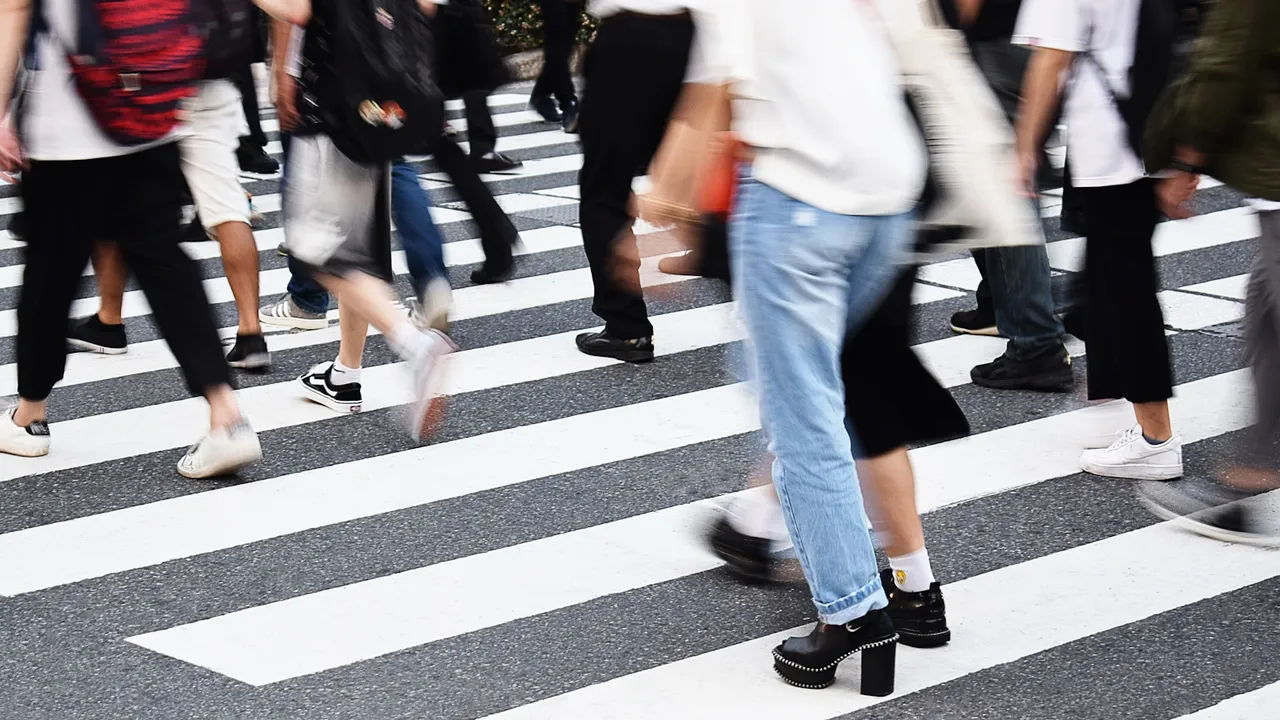
Pedestrians have strong right-of-way protections in California. Drivers must yield to people in marked and unmarked crosswalks and use due care at all times under Vehicle Code § 21950. When a driver fails to do so, an injured pedestrian generally has a claim for their losses.
The crosswalk rule
Drivers must yield to pedestrians crossing in a marked crosswalk or an unmarked crosswalk at an intersection, and must always use reasonable care for people on foot. Pedestrians, in turn, must not suddenly leave a curb into a vehicle's path, as our right-of-way guide explains.
How fault is decided
Drivers sometimes claim the pedestrian "came out of nowhere." California's pure comparative fault rule still allows an injured pedestrian to recover even if partly at fault, reduced by their share.
| Situation | Typical fault direction |
|---|---|
| Driver failed to yield in a crosswalk | Driver fault |
| Pedestrian darted mid-block | Shared or pedestrian fault |
| Both inattentive | Split by comparative fault |
Which coverage pays
Pedestrian injuries are frequently severe. The at-fault driver's liability coverage usually applies, and if the driver is uninsured or fled, your own uninsured motorist coverage may help. A free consultation can explain your options after a pedestrian accident.
Frequently Asked Questions
Does the pedestrian always have the right of way in California?
Can I recover if I jaywalked?
What if the driver says I came out of nowhere?
Who pays if the driver has no insurance?
What should I do after being hit while walking?
Are pedestrian injuries usually serious?
What does the driver's duty of care mean?
How long do I have to file?
Have a question about your situation?
Our California personal injury attorneys offer free, confidential consultations.
Keep Reading
Related Articles
California Bicycle Accident Claims: Rights of Injured Cyclists
Cyclists have the same road rights as drivers in California. Learn how injury claims work when a driver hits a bicyclist.
Left-Turn Motorcycle Crashes in California
The most common and dangerous motorcycle crash is a car turning left across a rider’s path. Here is how fault usually works.
California Motorcycle Helmet Law and Your Injury Claim
California requires helmets for every rider. Here is what the law says and how helmet use can affect a motorcycle injury claim.
California Motorcycle Accident Claims: What Riders Face
Motorcyclists face serious injuries and unfair bias after a crash. Here is what California riders should know about their claims.

The Evidence That Disappears After a Truck Crash
The records that prove a truck case are mostly electronic — and most of them are on retention schedules. Here is what exists, how long it typically survives, and what a preservation letter does.

Why Truck Accident Claims Are Bigger — and Harder to Win
Truck claims carry larger policies and larger injuries — and they are defended far more aggressively, often by investigators who reach the scene before the vehicles are moved. Here is what that asymmetry means for you.