
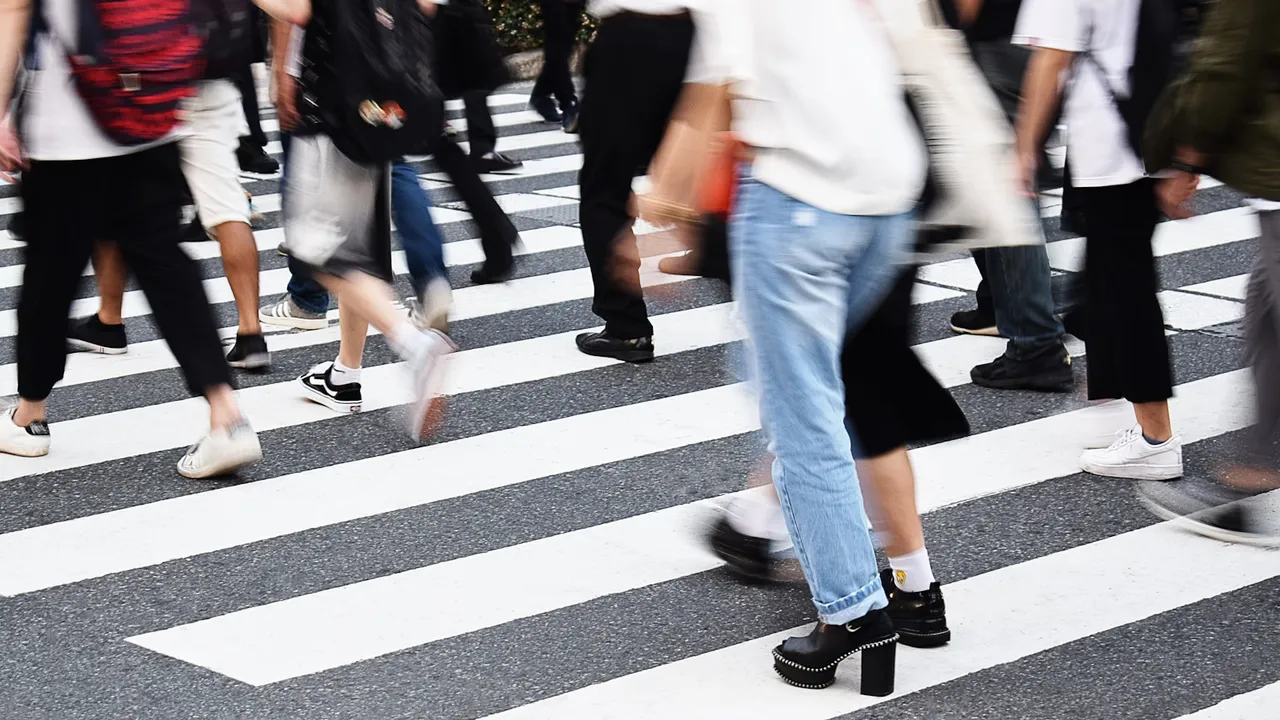
Pedestrians are among the most vulnerable people on California's roads. When a person on foot is struck by a vehicle, the case almost always turns on one question: who had the right of way? The answer is set out in the Vehicle Code — and it is more nuanced than "the pedestrian is always right." This is general information, not legal advice.
The core rule: Vehicle Code section 21950
California Vehicle Code section 21950(a) requires that "the driver of a vehicle shall yield the right-of-way to a pedestrian crossing the roadway within any marked crosswalk or within any unmarked crosswalk at an intersection."
Two words in that sentence do a great deal of work:
- Marked crosswalk — the painted lines most people picture.
- Unmarked crosswalk — and this is the part drivers routinely miss. An unmarked crosswalk generally exists at an intersection even with no paint on the road at all. A pedestrian crossing at a normal corner is usually in a crosswalk in the eyes of the law.
The statute goes further. Subdivision (c) requires a driver approaching a pedestrian in a crosswalk to "exercise all due care" and to "reduce the speed of the vehicle or take any other action" needed to protect that person's safety. Simply not hitting someone is not the standard — slowing down is part of the duty.
Pedestrians have duties too
Section 21950(b) places real obligations on people on foot. A pedestrian must use due care for their own safety and may not "suddenly leave a curb or other place of safety and walk or run into the path of a vehicle that is so close as to constitute an immediate hazard." Pedestrians also may not unnecessarily stop or delay traffic while in a crosswalk.
Importantly, subdivision (d) makes clear that a pedestrian's failure to follow those rules does not relieve a driver of the duty to exercise due care. Both duties exist at the same time.
What about crossing outside a crosswalk?
Crossing mid-block between adjacent signalized intersections generally requires yielding to vehicles. But — and this surprises many people — being outside a crosswalk does not automatically end a claim. Drivers still owe a duty of due care to everyone on the road, and factors like speed, distraction, visibility, and whether the driver could have avoided the collision all remain in play.
How fault actually gets decided
California does not treat these cases as all-or-nothing. Under the state's pure comparative negligence rule, responsibility is divided by percentage. If a pedestrian is found partly at fault, their recovery is reduced by that share — but it is not eliminated. Someone found 25% at fault can still recover 75% of their damages.
This is exactly why insurers work so hard to shift a percentage onto the injured person: every point of fault they assign is money off the claim.
Evidence that decides crosswalk cases
Because these cases so often come down to competing accounts, the evidence gathered early matters enormously:
- The traffic collision report and any citation issued
- Signal timing and whether a walk signal was displayed
- Nearby business, doorbell, or traffic camera footage — often overwritten within days
- Vehicle damage and point of impact, which can indicate speed and position
- Independent witness statements
- Medical records connecting injuries to the collision
If you were hit while walking
Get medical attention the same day, even if you feel able to walk away — internal and head injuries frequently present later. Report the collision, photograph the scene and the crosswalk markings, and be cautious about giving a recorded statement before you understand how fault is being assessed. Our pedestrian accident attorneys can review what happened at no cost. Every case is different, and outcomes depend on the specific facts.
Frequently Asked Questions
Do drivers have to yield to pedestrians in California?
Is there a crosswalk if there are no painted lines?
Can I still recover if I was jaywalking?
What should I do after being hit by a car while walking?
Have a question about your situation?
Our California personal injury attorneys offer free, confidential consultations.
Keep Reading
Related Articles

The Evidence That Disappears After a Truck Crash
The records that prove a truck case are mostly electronic — and most of them are on retention schedules. Here is what exists, how long it typically survives, and what a preservation letter does.

Why Truck Accident Claims Are Bigger — and Harder to Win
Truck claims carry larger policies and larger injuries — and they are defended far more aggressively, often by investigators who reach the scene before the vehicles are moved. Here is what that asymmetry means for you.

Truck Driver Fatigue and Hours-of-Service Rules in California
Federal law caps how long a commercial driver may be behind the wheel — 11 hours of driving inside a 14-hour window, with mandatory breaks. When those limits are broken, the logs become some of the strongest evidence in the case.

Who Is Liable in a California Truck Accident?
A car crash usually has one defendant. A truck crash often has five. Here is every party who can be on the hook in a California commercial truck case, and why finding all of them changes what you recover.
Car Accident in Folsom, CA: The Complete Local Guide to What Happens Next
A crash in Folsom runs on local rails — which agency writes your report, which hospital you are routed to, which deadlines apply, and which courthouse your case lands in. This is the local guide generic California articles cannot give you.
E-Bike Accident Liability in California: Who Pays When a Ride Goes Wrong?
E-bikes have filled Folsom's trails and bike lanes — and its ERs. When a crash causes real injury, who pays? California liability turns on three dials car cases never have: the bike's class, whose trail you were on, and the 2025–26 equipment rules.