
In this article
E-bikes have changed how Folsom moves. They've filled the trails, the bike lanes on East Bidwell, and the school pick-up lines — and they've filled emergency rooms too, because a 28-mph machine sharing space with cars, pedestrians, and nine-year-olds on scooters produces collisions that plain bicycles never did. When one of those crashes causes a real injury, the first question is always the same: who pays for this?
E-bike accident liability in California follows ordinary negligence rules: whoever failed to use reasonable care — and caused the crash by it — is responsible for the harm. There's no special e-bike liability statute. A driver who left-hooks a rider in a bike lane is liable the same way they would be for hitting a regular cyclist.
What makes these cases different is the comparative-fault math layered on top. California reduces your recovery by your own percentage of fault, and with e-bikes, three questions feed that percentage that never come up in car-versus-car cases: What class of e-bike was it? Was the rider somewhere that class is legally allowed to be? And did the helmet rules apply? In an electric-bike crash, who is at fault is rarely all-or-nothing — it's a percentage fight, and the details below are the ammunition each side uses.
California's Three E-Bike Classes — and Why They Matter
California Vehicle Code section 312.5 sorts every legal electric bicycle into Class 1, 2, or 3, and the classification does real legal work: it determines the minimum age, the helmet rule, and — most importantly for a liability fight — where the bike was allowed to be when the crash happened.
| Feature | Class 1 | Class 2 | Class 3 |
|---|---|---|---|
| Motor type | Pedal-assist only | Throttle (works without pedaling) | Pedal-assist only |
| Motor cuts off at | 20 mph | 20 mph | 28 mph |
| Minimum rider age | None | None | 16 |
| Helmet required | Under 18 | Under 18 | All riders, every age |
| Bike paths & trails (state default) | Allowed | Allowed | Restricted unless a local rule allows it |
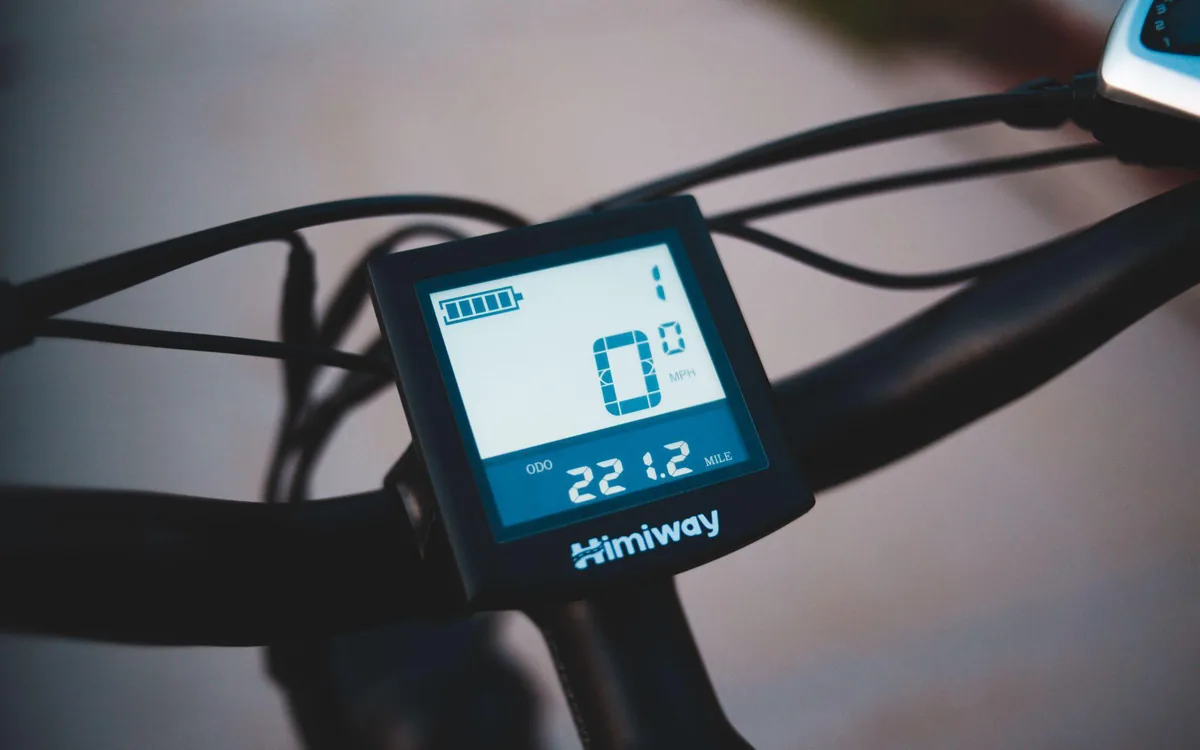
Two recent laws tightened this system, and both matter in injury cases. Under SB 1271, effective in 2025, the 750-watt motor limit became a hard cap and the class definitions were sharpened — a machine that exceeds the cap, lacks operable pedals, or has been modified out of its class isn't legally an e-bike at all, but an unregistered motor vehicle, with everything that implies for fault and insurance. And starting January 1, 2026, new e-bikes and batteries sold or leased in California must be certified by an accredited lab to recognized safety standards, while a separate 2026 rule (AB 544) requires every e-bike to carry a rear red reflector or light at all times — not just after dark.
Who Can Be Liable in an E-Bike Crash?
Liability isn't a single answer — it's a list of candidates, and serious cases often involve more than one.
The driver of the car — the most common defendant
Most serious e-bike injuries involve a motor vehicle: the left turn across a bike lane, the right hook at a driveway, the door flung open into a passing rider, the driver who "never saw" the bike at a trail crossing. Drivers owe cyclists — electric or not — the same duty of care they owe everyone else, and California law requires them to give riders at least three feet when passing. If you were hit by a car on an e-bike, the analysis starts exactly where it would for any cyclist: the driver's speed, attention, and right-of-way obligations. One 2026 wrinkle cuts both ways — a rider without the now-required rear reflector gives the insurer a violation to argue, while a driver who hit a properly equipped rider has one less excuse.
The rider's own comparative fault
Expect the insurance company to scrutinize the rider as hard as the driver. Was a 14-year-old on a Class 3 bike that requires riders to be 16? Was a Class 3 bike on a trail where it's banned? Was the rider doing 25 in a posted 15-mph trail zone, riding a modified throttle bike that no longer legally qualifies as an e-bike, or skipping a helmet the law required? None of these automatically kills a claim — California's pure comparative fault system reduces recovery rather than barring it — but each one hands the defense a percentage argument, and percentages are money.
The manufacturer or seller — product liability
Battery fires, brake failures, snapped forks, throttles that stick: when the machine itself fails, liability can run to the manufacturer, importer, or retailer under product liability law, which doesn't require proving anyone was careless — only that the product was defective and the defect caused the injury. SB 1271's certification regime sharpened this front considerably. After January 1, 2026, an uncertified battery isn't just dangerous; selling it is unlawful, which strengthens claims against sellers who kept moving uncertified stock. If a battery fire or component failure hurt you, preserving the bike itself — unrepaired, unmodified — is the single most important thing you can do.
The city, county, or property owner
When a crash is caused by the riding surface rather than another person — a sinkhole in the pavement, a washed-out trail edge, vegetation hiding a road crossing — liability can reach the public entity or private landowner responsible for the dangerous condition. These are real claims, but as the next two sections explain, claims against government entities run on special rules and short deadlines.
E-Bike Crashes on Folsom's Trails: Three Sets of Rules in One Ride
Here's what almost nobody riding Folsom's 60-plus miles of trails realizes (our Folsom car accident guide covers the wider local picture): the rules change under your wheels depending on whose trail you're on — and in a liability fight, those differences decide who was somewhere legal.
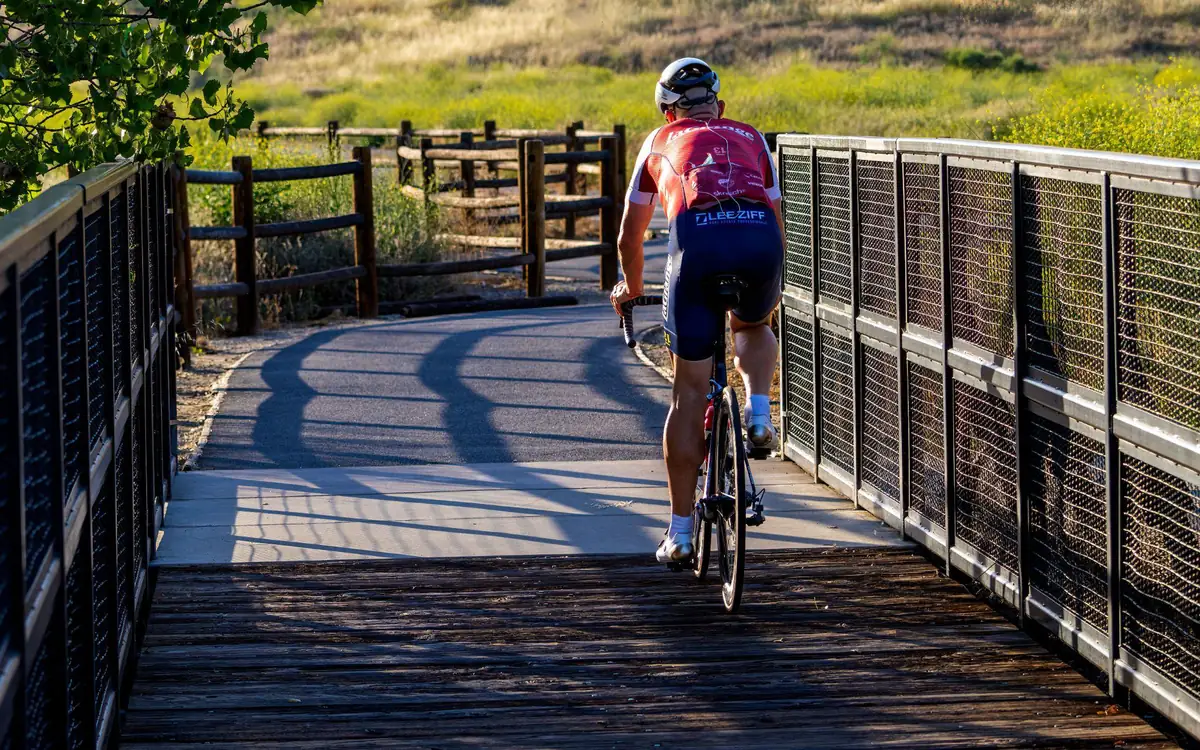
On City of Folsom trails — including the Johnny Cash Trail and the Humbug-Willow Creek system — all three e-bike classes are currently permitted, the posted speed limit is 15 mph, and electric motorcycles are prohibited outright. Cross onto the American River Parkway, though, and the rules tighten: Sacramento County allows Class 1 and Class 2 e-bikes at 15 mph or less, but Class 3 e-bikes are banned from county regional parks entirely, Parkway included. And on Folsom Lake State Recreation Area trails, State Parks policy is stricter still — only Class 1 e-bikes, and only where the district superintendent has designated them.
Trace a single popular ride and you cross all three jurisdictions: start in Historic Folsom on city trails, roll onto the Parkway toward Beals Point, and finish on SRA ground. A Class 3 commuter bike is legal for the first leg and illegal for the rest of it. That's not trivia — if a crash happens on the Parkway, the first thing a defense lawyer checks is the class sticker on the rider's frame. A bike-trail accident claim can rise or fall on whether the rider was permitted to be on that stretch of pavement at all.
The other Folsom-specific danger zone is the trail-road crossing — the points where a 15-mph trail meets 45-mph traffic. At those crossings, trail etiquette ends and the Vehicle Code takes over: drivers owe crossing riders and walkers the duties covered in our pedestrian right-of-way guide, and a driver who blows through a marked trail crossing is a defendant, whatever class of bike you were on.
Suing a City for a Dangerous Trail Condition
If a dangerous condition of public property — a crumbling trail edge, a missing barrier, a sightline blocked by untrimmed vegetation — caused your crash, you may have a claim against the city, county, or state agency that controls it. But two special rules apply, and both are unforgiving.
First, the deadline: before you can sue a California public entity for injury, you must present a written government claim, generally within six months of the crash. Miss that window and even a strong case can die on procedure. Second, the defenses: public entities have statutory immunities for recreational trails that private defendants don't get, which means these cases turn on precise facts about where the crash happened and what, exactly, caused it — a road crossing is analyzed very differently from a stretch of open trail.
The honest summary is that trail cases against public entities are winnable but technical, and the six-month clock means the evaluation has to happen early, not after the insurance negotiation stalls. Until we publish our in-depth government-claim guide, treat six months as the number to remember.
The Insurance Gap Nobody Warns You About
Here's the unpleasant surprise waiting inside most e-bike crashes: your auto policy does not cover you while you're riding. Auto liability follows your car, not your handlebars — so if you injure a pedestrian on the trail, your car insurance isn't the backstop. Homeowners or renters liability coverage sometimes fills that gap, but many policies exclude motorized vehicles, and whether a Class 1 or 2 e-bike slips through the exclusion depends on the exact policy language. If you own an e-bike, this is a ten-minute call to your agent that's worth making before you need it.
The picture is better when a car hits you. The driver's auto liability coverage applies to you as a cyclist just as it would to a pedestrian — though many drivers carry only California's minimum limits, which serious injuries outrun quickly. The quiet hero is your own uninsured/underinsured motorist (UM/UIM) coverage: it follows you, not your car, and it generally protects you when a driver with too little insurance — or none, in a hit-and-run — strikes you on your bike. Riders are routinely stunned to learn the auto policy they thought was irrelevant to cycling is the policy that ends up paying their claim.
What to Do After an E-Bike Crash
- Get medical care the same day, even if you rode away. Adrenaline hides injuries, and treatment gaps become the insurer's argument.
- Call the police and get a report — Folsom PD on city streets and trails, CHP if a vehicle hit you on or near Highway 50. Our accident report guide covers how to get the copy.
- Photograph everything: the vehicles, your bike, the class sticker on its frame, the trail or road surface, and any posted signs.
- Get witness names before they leave. Trail witnesses are gone in minutes.
- Preserve the bike exactly as it is — unrepaired — especially if a battery or component fails.
- Talk to a lawyer before the recorded statement. Comparative-fault percentages are negotiated, and early admissions set anchors that are hard to move.
The Bottom Line
E-bike liability isn't a new body of law — it's ordinary negligence with three extra dials: the bike's class, the rules of the specific trail or road, and the equipment requirements that changed in 2025 and 2026. Those dials move fault percentages, and fault percentages move money. Know your bike's class, know whose trail you're on, and if a crash happens anyway, treat the details — the sticker, the signs, the surface — as the evidence they are.
Whether a driver hit you at a crossing, a battery failed under you, or a trail condition put you on the ground, sorting out who pays takes more than a police report — it takes finding every liable party and every policy fast, before the six-month government-claim window closes on any public-entity angle. Our California injury attorneys represent injured riders throughout Folsom and the Sacramento region. Tell us what happened in a free case evaluation — you pay nothing unless we recover for you. Call (916) 587-2997 to get started.
Frequently Asked Questions
Who is at fault in an e-bike accident?
Are e-bikes allowed on Folsom trails?
Do I need insurance for an e-bike in California?
What if a car hit me in a bike lane?
Can I sue the city for a dangerous trail?
What if my child was hurt on an e-bike?
Have a question about your situation?
Our California personal injury attorneys offer free, confidential consultations.
Keep Reading
Related Articles

The Evidence That Disappears After a Truck Crash
The records that prove a truck case are mostly electronic — and most of them are on retention schedules. Here is what exists, how long it typically survives, and what a preservation letter does.

Why Truck Accident Claims Are Bigger — and Harder to Win
Truck claims carry larger policies and larger injuries — and they are defended far more aggressively, often by investigators who reach the scene before the vehicles are moved. Here is what that asymmetry means for you.

Truck Driver Fatigue and Hours-of-Service Rules in California
Federal law caps how long a commercial driver may be behind the wheel — 11 hours of driving inside a 14-hour window, with mandatory breaks. When those limits are broken, the logs become some of the strongest evidence in the case.

Who Is Liable in a California Truck Accident?
A car crash usually has one defendant. A truck crash often has five. Here is every party who can be on the hook in a California commercial truck case, and why finding all of them changes what you recover.
Car Accident in Folsom, CA: The Complete Local Guide to What Happens Next
A crash in Folsom runs on local rails — which agency writes your report, which hospital you are routed to, which deadlines apply, and which courthouse your case lands in. This is the local guide generic California articles cannot give you.
How Much Is My California Car Accident Case Worth? (2026 Guide)
"How much is my case worth?" is the first question after a crash — and the honest answer is: it depends. Here is what actually drives the value of a California car accident claim, and what can quietly shrink it.