
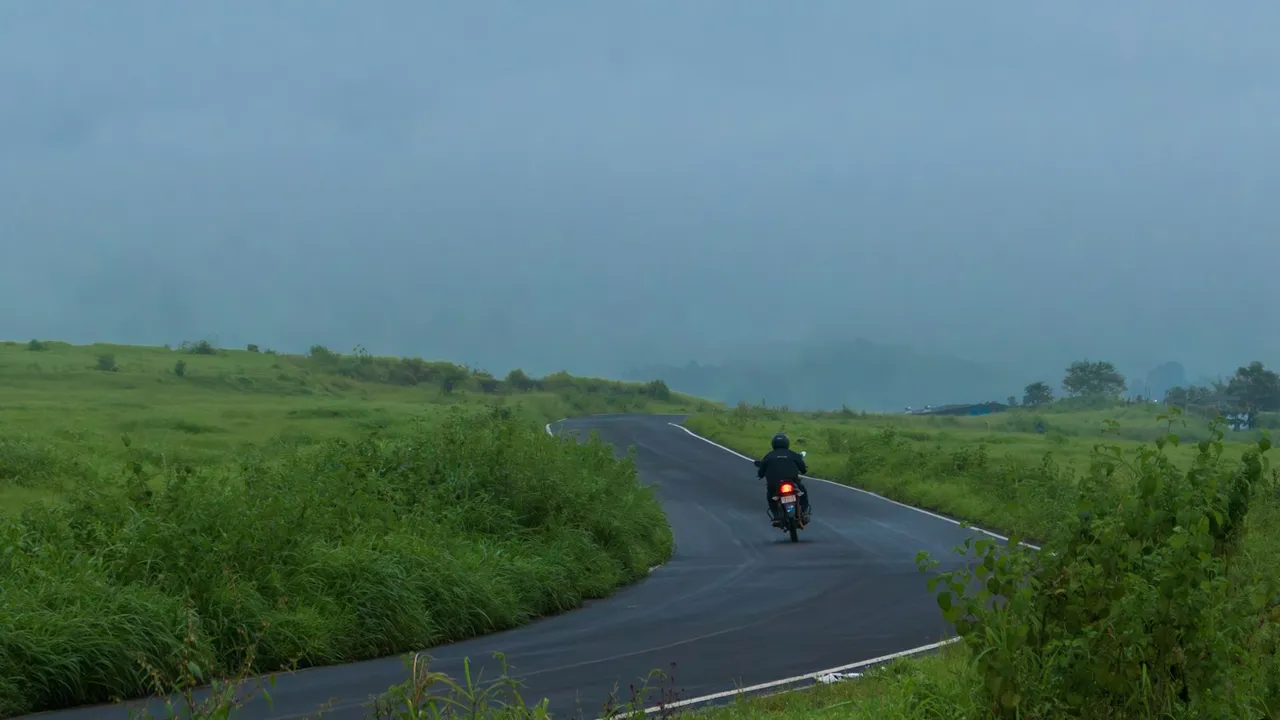
California occupies a unique place in American motorcycle law: it is the state that formally recognized lane splitting in statute. But there is a great deal of misinformation about what the law actually permits — including a widely repeated "speed limit" that does not appear in the statute at all. This is general information, not legal advice.
What the statute actually says
California Vehicle Code section 21658.1 defines lane splitting as "driving a motorcycle ... that has two wheels in contact with the ground, between rows of stopped or moving vehicles in the same lane."
The statute then authorizes the California Highway Patrol to "develop educational guidelines relating to lane splitting" in consultation with traffic safety and motorcycle organizations.
The myth: a legal speed limit
You will frequently read that lane splitting is legal "up to 10 mph faster than traffic" or "under 30 mph." Those figures come from safety guidance, not from the statute. Section 21658.1 does not establish any specific speed limit for lane splitting.
That distinction matters after a crash. Because the statute sets no numeric threshold, a rider is not automatically violating 21658.1 by exceeding a guidance figure — though speed and reasonableness remain central to whether the rider was operating safely, and ordinary Vehicle Code rules on speed and safe operation still apply.
The CHP safety guidance
The CHP's educational guidance generally encourages riders to keep speed differentials modest, to avoid splitting next to large vehicles like trucks and buses, to be wary of blind spots, and to recognize that splitting between the two leftmost lanes is typically safer than elsewhere. This is safety advice designed to reduce risk — useful for riders, and often cited by both sides after a collision.
How fault is decided in a lane-splitting crash
California uses pure comparative fault, so responsibility is apportioned by percentage rather than assigned entirely to one party. In lane-splitting cases the argument usually centers on a handful of factors:
- The speed differential between the motorcycle and surrounding traffic
- Whether the driver changed lanes without signaling or checking mirrors and blind spots
- Visibility, lighting, and lane width
- Whether a driver deliberately blocked or moved toward the rider — which is itself unlawful conduct
- Traffic conditions and how much room actually existed
Even a rider found partly responsible can recover a reduced amount. Being assigned 20% of the fault reduces the recovery by 20% — it does not eliminate the claim.
Rider bias is a real obstacle
Insurance adjusters know that some jurors arrive with assumptions about motorcyclists being reckless, and claims involving lane splitting attract that bias directly. Expect early attempts to characterize the rider as weaving, speeding, or appearing "out of nowhere."
Countering that generally takes objective evidence: helmet or dashcam footage, ECU and telemetry data, physical evidence about the point of impact, independent witnesses, and sometimes accident reconstruction.
After a lane-splitting collision
Get medical care promptly — protective gear can mask injuries that surface later. Preserve the motorcycle and your gear in their post-crash condition, photograph lane positions and traffic conditions, and gather witness information before people disperse. Our motorcycle accident attorneys handle these claims and offer a free case review. Outcomes depend on the specific facts of each case.
Frequently Asked Questions
Is lane splitting legal in California?
Is there a speed limit for lane splitting in California?
Can I still recover if I was lane splitting when the crash happened?
What if a driver blocked me on purpose?
Have a question about your situation?
Our California personal injury attorneys offer free, confidential consultations.
Keep Reading
Related Articles

The Evidence That Disappears After a Truck Crash
The records that prove a truck case are mostly electronic — and most of them are on retention schedules. Here is what exists, how long it typically survives, and what a preservation letter does.

Why Truck Accident Claims Are Bigger — and Harder to Win
Truck claims carry larger policies and larger injuries — and they are defended far more aggressively, often by investigators who reach the scene before the vehicles are moved. Here is what that asymmetry means for you.

Truck Driver Fatigue and Hours-of-Service Rules in California
Federal law caps how long a commercial driver may be behind the wheel — 11 hours of driving inside a 14-hour window, with mandatory breaks. When those limits are broken, the logs become some of the strongest evidence in the case.

Who Is Liable in a California Truck Accident?
A car crash usually has one defendant. A truck crash often has five. Here is every party who can be on the hook in a California commercial truck case, and why finding all of them changes what you recover.
Car Accident in Folsom, CA: The Complete Local Guide to What Happens Next
A crash in Folsom runs on local rails — which agency writes your report, which hospital you are routed to, which deadlines apply, and which courthouse your case lands in. This is the local guide generic California articles cannot give you.
E-Bike Accident Liability in California: Who Pays When a Ride Goes Wrong?
E-bikes have filled Folsom's trails and bike lanes — and its ERs. When a crash causes real injury, who pays? California liability turns on three dials car cases never have: the bike's class, whose trail you were on, and the 2025–26 equipment rules.